
The 27 nakshatras are the finest-grained layer of your chart — the zodiac's "cosmic address." But a nakshatra is far more than a slice of sky. Each one is governed by a deity: a presiding intelligence that the classical tradition says shapes everything that happens under that mansion's light.
Think of the deity as the nakshatra's personality. The deity is what the mansion wants — the kind of life it nourishes, the gifts it hands out, and the price it asks in return. When astrologers say someone "has their Moon in Ashwini," they are really saying: the part of you that feels and remembers was born under the care of the Ashwini Kumaras, the divine physicians. That single fact colours the Moon the way a room colours the light inside it.
This is the complete map of the 27 deities — the presiding gods, the symbols, the animal forms, and the energy each mansion carries.
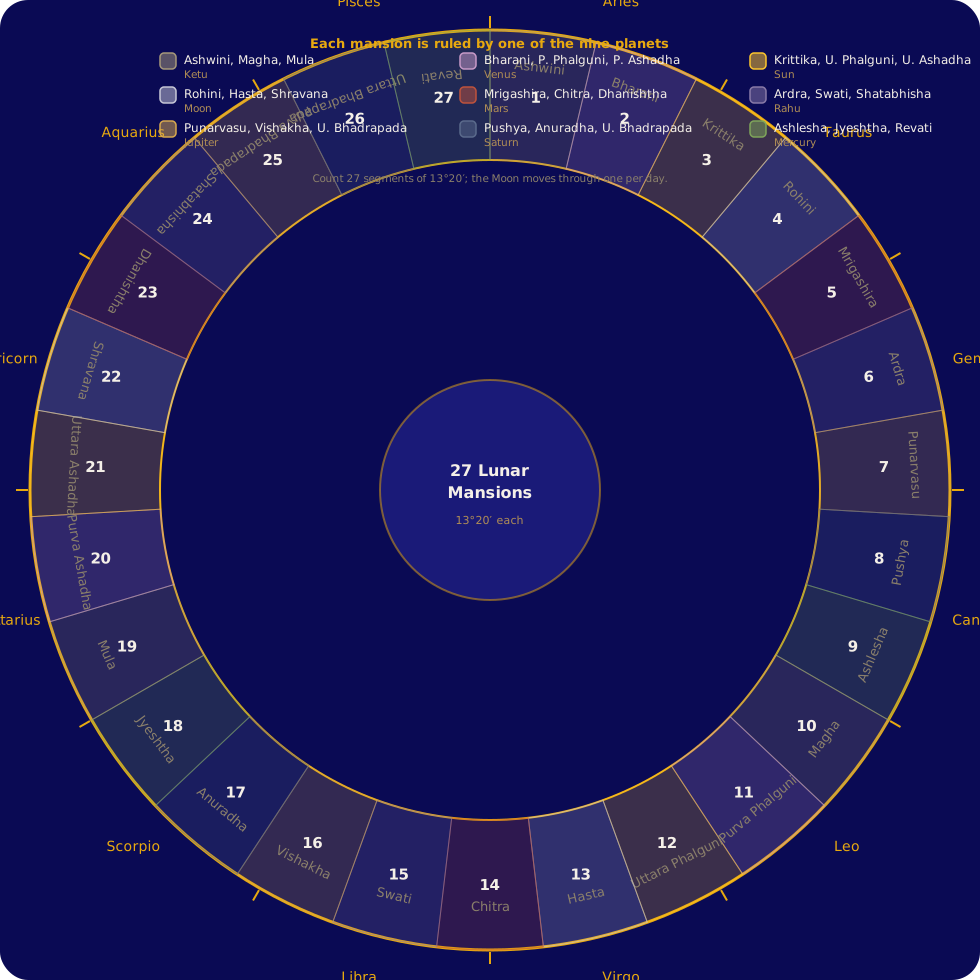
The full table
| # | Nakshatra | Deity | Symbol | Animal | Core energy |
|---|---|---|---|---|---|
| 1 | Ashwini | The Ashwini Kumaras — divine physicians | Horse's head | Horse | Swift beginnings, healing, speed |
| 2 | Bharani | Yama — lord of death and dharma | Yoni | Elephant | Restraint, transformation, endings |
| 3 | Krittika | Agni — the fire god | Razor / flame | Sheep | Purification, sharpness, courage |
| 4 | Rohini | Prajapati — the creator | Chariot / cart | Serpent | Growth, beauty, abundance |
| 5 | Mrigashira | Soma — the Moon god | Deer's head | Serpent | Seeking, curiosity, restlessness |
| 6 | Ardra | Rudra — the storm god | Teardrop | Dog | Storms, tears, radical transformation |
| 7 | Punarvasu | Aditi — mother of the gods | Bow and quiver | Cat | Renewal, return, unconditional giving |
| 8 | Pushya | Brihaspati — guru of the gods | Cow's udder | Sheep | Nourishment, teaching, protection |
| 9 | Ashlesha | The Nagas — the serpents | Coiled serpent | Cat | Depth, cunning, kundalini power |
| 10 | Magha | The Pitrs — the ancestors | Throne | Rat | Lineage, authority, inherited power |
| 11 | Purva Phalguni | Bhaga — god of fortune and marriage | Front legs of a cot | Rat | Pleasure, romance, good fortune |
| 12 | Uttara Phalguni | Aryaman — god of patronage | Back legs of a cot | Cow | Friendship, contracts, generosity |
| 13 | Hasta | Savitar — the Sun god of skill | Hand | Buffalo | Craftsmanship, dexterity, wit |
| 14 | Chitra | Tvashtar — the divine architect | Bright jewel | Tiger | Craft, brilliance, the master builder |
| 15 | Swati | Vayu — the wind god | Young sprout in wind | Buffalo | Independence, adaptability, air |
| 16 | Vishakha | Indra-Agni — the two gods of power | Triumphal arch | Tiger | Ambition, purpose, focused drive |
| 17 | Anuradha | Mitra — god of friendship | Lotus | Deer | Loyalty, alliance, devotion |
| 18 | Jyeshtha | Indra — king of the gods | Earring / amulet | Deer | Seniority, power, protection |
| 19 | Mula | Nirriti — goddess of dissolution | Tied roots | Dog | Rooting out, destruction, renewal |
| 20 | Purva Ashadha | Apas — the waters | Winnowing basket | Monkey | Purification, early victory |
| 21 | Uttara Ashadha | The Vishvedevas — the universal gods | Elephant tusk | Monkey | Universal victory, lasting fame |
| 22 | Shravana | Vishnu — the preserver | Arrow / ear | Monkey | Listening, learning, preservation |
| 23 | Dhanishtha | The Vasus — the eight wealth-gods | Drum | Lion | Abundance, rhythm, collective wealth |
| 24 | Shatabhisha | Varuna — god of cosmic waters | Empty circle | Horse | Healing, secrecy, the vast deep |
| 25 | Purva Bhadrapada | Aja Ekapada — the one-footed fire | Two-faced figure / sword | Lion | Fierce ascetic fire, intensity |
| 26 | Uttara Bhadrapada | Ahirbudhnya — serpent of the deep | Twin feet / trident | Cow | Depth, stillness, hidden wisdom |
| 27 | Revati | Pushan — the nourisher | Fish / drum | Elephant | Safe passage, nourishment, care |
Stories worth telling
A table gives the map; the stories give the territory. Here are the deities whose myths most strongly shape how their mansions behave.
Ashwini — the physicians who arrive first. The Ashwini Kumaras, twin sons of the Sun, are the fastest healers in the pantheon — they fly on a golden chariot and reach the wounded before anyone else. Their mansion is the first of the zodiac, the point where a new cycle begins, and it carries exactly that medicine: speed, fresh starts, and the instinct to fix things the moment they break. A Moon in Ashwini tends to act before others finish thinking.
Bharani — the gate Yama keeps. Yama is the lord of death — but in the classical worldview, death is not an enemy; it is the boundary that makes life meaningful. Bharani is the mansion of bearing, restraint, and transformation: it can carry heavy burdens without complaint, and it knows when something must end so something else can begin. Its energy is the courage to finish things.
Rohini — the creator's favourite. Rohini is ruled by Prajapati, the creator, and the Moon's own favourite wife in the myth of the twenty-seven. It is the mansion of growth and beauty — the ox-cart that carries abundance, the place where things ripen. Rohini natives often have a quiet magnetism and a gift for creating environments where things flourish.
Ardra — the storm that clears. Rudra is the wild god of the storm — fierce, unpredictable, and ultimately a force of purification. Ardra is the mansion of the teardrop: it brings the upheavals that wash a life clean. Under its influence, things break — but what survives the storm is genuine.
Magha — the ancestors' throne. The Pitrs are the ancestors, and Magha is their throne room. It carries inherited authority, respect for lineage, and the weight of family legacy. A Magha Moon often feels a duty to the people who came before — and a natural sense of kingship.
Chitra — the architect's jewel. Tvashtar is the divine craftsman who builds the worlds' palaces and shapes the gods' weapons. Chitra is the mansion of the bright jewel: beauty, craft, and the ability to design something extraordinary. It is the nakshatra of artists, engineers, and anyone who shapes matter into meaning.
Shatabhisha — the healer's deep waters. Varuna is the god of the cosmic ocean — the vast, hidden, all-holding deep. Shatabhisha is the empty circle: the mansion of healers, researchers, and those who work in secrecy. Its energy is the knowledge that lives below the surface, the cure that comes from understanding the whole.
Revati — the safe journey home. Pushan is the nourisher who guides travellers, protects herds, and sees that no one is lost on the road. Revati, the final nakshatra, closes the zodiac the way Ashwini opens it: with care, safe passage, and the completion of the journey. A Revati Moon tends to be gentle, generous, and quietly protective of others.
How to read your own deity
Find your Moon's nakshatra — it is your mind's cosmic address, the mansion your Moon occupied at birth. Then look at the deity:
- What does this god give? The deity's gifts are the abilities that come naturally to you — Ashwini's healing speed, Hasta's craftsmanship, Shravana's listening, Dhanishtha's sense of rhythm.
- What does this god demand? The deity's nature is also your challenge — Bharani's acceptance of endings, Ardra's storms, Mula's ruthless honesty.
- What does this god protect? The deity's domain is where you are safest — and where your life's work usually lies.
The deity is not a destiny; it is a temperament. It is the flavour of the light your Moon was born under — and once you know the name of the god who holds that lamp, your own patterns become legible in a way degrees alone can never show.